Start date: 2nd October 2025
Start town: Johor Bahru, Johor
End date: 3rd November 2025
End town: Padang Besar, Perlis
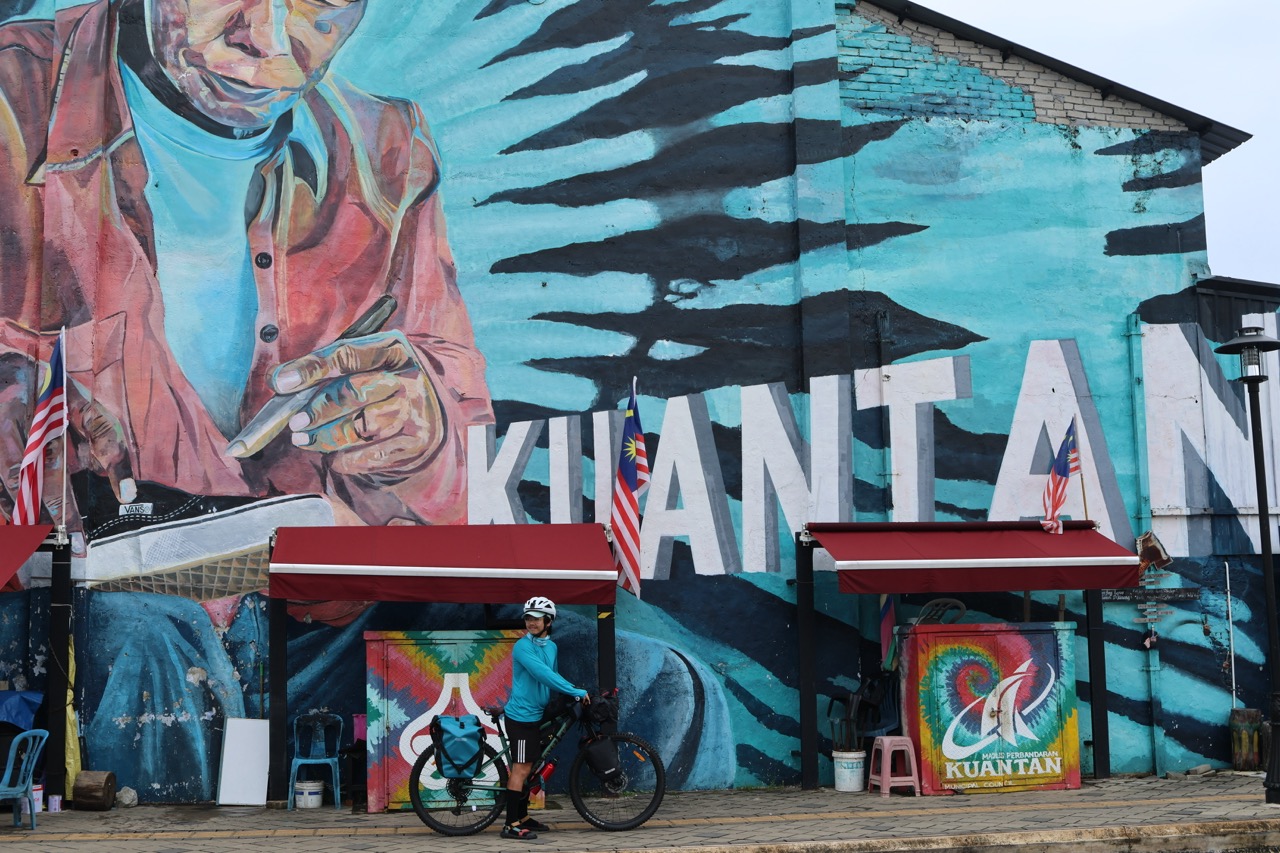
Welcome to Malaysia! A multicultural hotpot of people, flavours and places. We travelled up the east coast of Malaysia from Johor Bahru to Kota Bahru, then hopped over to the west coast to cross into Thailand via Padang Besar. The route had already been decided for us as Tash had family to visit on the east coast. Even though the east is not as well-travelled as the west, we ended up enjoying the quiet roads and local towns. The roads were not too busy and most of the time had a shoulder for cyclists. We did miss out on some quintessential cities like Melaka and Kuala Lumpur, but we were happy to discover cities like Kuantan and Kota Bharu instead. We would definitely recommend to cross over to the west coast at some point though. This is to not miss Penang's capital, Goergetown - by far our favourite city in Peninsular Malaysia.
Cycling-wise, this was Huy's first ever bicycle tour and Malaysia was our first big country to traverse.
Yes, this is Huy's first ever multi-day bicycle tour. The most he had cycled before this trip was 60km, to the city and back. Can you believe it? He agreed to come cycling for 3 years without even experiencing it beforehand. I think he is more courageous than me!
In designing the Malaysia route, we decided we should ease into it. Especially for someone who has never toured before, they have to build the right endurance muscles and be comfortable on the saddle before being able to do big days without much thought or pain. Also, we needed to get used to the daily routine, the heat, the logistics of where to stay and where to eat, not having access to showers or a washing machine all the time, etc. So we decided to cap our cycling to an average of 50-60km/day for the first two weeks, gradually increasing it when Huy was more comfortable.

Here our are 3 key take-aways for Malaysia:
Malaysia is hot. Really, really hot. So be prepared to be drenched in sweat in the first five minutes of cycling. Pack lightweight, quick dry clothes and a hat which can keep the sun off your face. Malaysia is known for its hot tropical climate and you can expect temperatures of 28°C to 32°C and humidity levels of ~80% (like hitting a wall of hot oven air and not being able to escape).
The best time to visit the east coast is between March and October. The North-east monsoon season for the east coast is between November and February where storms can be so severe boats don't set sail to islands and flooding is widespread. Outside of the monsoon season, showers still occur frequently (almost every afternoon) but they are usually short and don't last for hours.
In the west coast, most of the year is characterised by hot, sunny weather with frequent daily thunderstorms. The wet weather is not as predictable like the east coast, however you can expect heavy rains in the months of May through to November. Though, rainfall in this period is not as heavy as the North-east monsoon season on the east coast so it shouldn't deter you from travelling there.
We started wild camping in the second week of Malaysia and were able to find quiet spots on the beach. Though, Malaysians do love a beach barbecue and you can expect to see a group occasionally flock to the beach for a barbecue late at night. We were caught next to a big group one night from 9pm to 1am. Though, they were nice and offered us food. We kindly declined and tried to go back to sleep.
%20Large.jpeg)
Compared to other south-east Asian countries, you could categorise the cost of Malaysian accommodation in the 'expensive' box. On average, we spent RM90 per night for a hotel or a homestay. Our cheapest stays were when we were cycling as a group of four and split costs (~RM50 per night) and the most expensive stay was in Goergetown (RM126 per night). We paid for campsites twice and one cost RM70 while the other one cost RM35. The difference being that the more expensive campsite was just across the border from Singapore. Malaysians can afford to raise the price here as Singaporeans have higher wages on average and tend to go to Malaysia for camping holidays.
Mostly, we stayed in homestays or roomstays in Malaysia. These are different as they are houses or rooms rented out by locals and are not like your classic hotel. These are cheaper and more cyclist-friendly than hotels. We were able to bring our bike into every room. For the bigger cities like Georgetown we found good deals on Agoda or Booking.com and made sure to message the property beforehand to confirm we could leave the bike somewhere safe. It is not advisable to leave your bike unlocked outside at night.

We experienced a really nice stay with a warmshowers host in Gerik for two days. Besides that, we were hosted by family and friends.
Malaysian food is the best in south-east Asia - but I am biased as I am Malaysian myself! Honestly though, you will love the food there. To understand Malaysian cuisine, you must first know that Malaysia is a culturally diverse country with a long history of colonisation by Portugese, Spanish, Japanese, creating a gastronomical hotpot with flavors that will confuse yet delight your tastebuds. Malaysians are made up of three races, Malay, Chinese and Indian, as well as ethnic Malay people (orang asli).
%20(1).png)
Total days: 32 days
Total spent: RM 4624 (*AUD 1661)
This includes a RM 570 (AUD 200) spend on bicycle maintenance/upgrade.
*based on a currency exchange of AUD 1 = RM 2.78
Food and drinks; meals we bought from restaurants including beverages
Average daily meal cost for two people: RM 61
In Malaysia, meals make up the majority of our costs (RM 1962) as we purchased food and drinks everyday from local vendors. Note that some meals were paid for by other people however. We didn't carry a stove with us so we didn't make our own food, however we did carry all our cooking equipment (which we need later in the Stans). Buying all our meals rather than cooking also saved us time. Depending on what we ate, eating out in Malaysia can be relatively cheap (and delicious). For example, you can get a breakfast Nasi Lemak (rice, anchovies, sambal, boiled egg) for two people for RM 10. Two servings of roti canai can cost you just RM3. Mixed rice (nasi campur) can cost RM15-20 depending on what sides you get. Stir fried noodles (char kuey tiau) can cost you RM9. All-in-all, we would recommend eating out while cycling through Malaysia. The food is abundant, different in each region and cheap.
Groceries; store bought items including snacks and water
We didn't do much grocery shopping, only in some instances (RM 189). For example, when we stayed at the guesthouse in Kuantan, I decided to go grocery shopping and cook in the kitchen provided for us. I made chicken soup and sago pudding - was so nice to cook again!
Accommodation; paid hotel, motel, homestay, campsite
Average accommodation cost for two people: RM 90
This was our second biggest spend from 16 nights of paid accommodation. A good price for a night in a paid accommodation is RM 80. Sometimes we had to pay a little more though, which is why our average accommodation cost is higher at RM 90.
Transport; paid car-sharing ride, ferry, taxi, bus, etc
We only spent money on one Grab ride for RM 9.
Medicine; any item from the drugstore
We spent funds on mosquito repellent, berocca, magnesium tablets and tiger balm (RM 153).
Gear; any equipment or item bought during the trip for the bicycle trip
In Johor Bahru, I visited the local Decathlon store to pick up on a few things for the trip including a bike lock (something you don't need to fly over with), caps for under our helmet and bike lube, etc (RM 157).
Maintenance; bicycle maintenance and repairs, and spare parts
At the Giant bicycle shop in Arau we made a few modifications to Huy's bike for RM 570. We bought two new tyres and set them up as tubeless. His old tyres were not suitable for tubeless. We extended his handlebar and shortened them as he was reaching too far forward and complaining of a sore lower back and wrists.
Miscellaneous; sim card, and other random items
We bought a local Malaysian simcard (Maxis) which cost RM40 for a month. The coverage was not reliable though and patchy. If we were to choose again, we would have bought Celcom although a little more expensive.
Other random miscellaneous items included stationery and funds for a broken tap.
If you have any questions or want some help planning your Malaysia tour, don't hesitate to reach out!
We have published all our journals and films for Malaysia. Read below >

Subscribe to our YouTube channel for immersive videos.

Follow us on Instagram for journey updates.